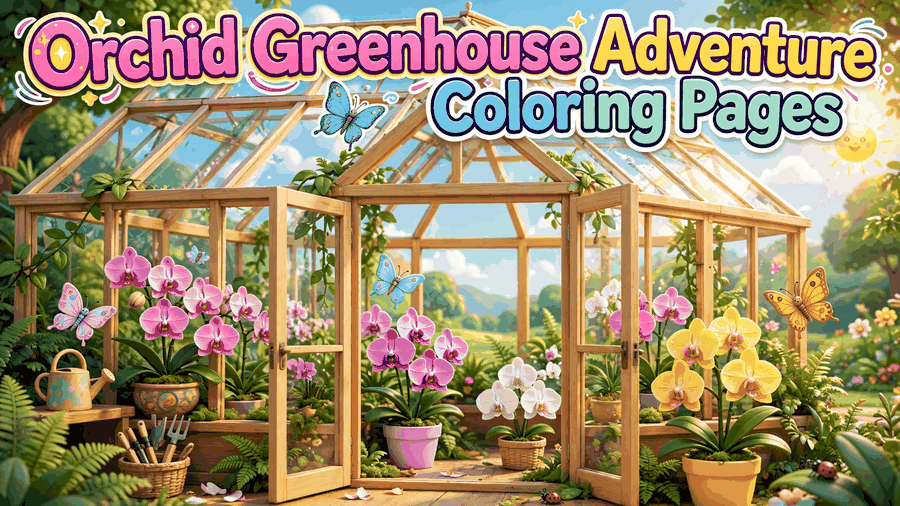
Orchid Greenhouse Adventure Coloring Pages invite children into a world of beautiful flowers, leafy plants, and peaceful greenhouse surroundings. Through coloring, young artists can explore the appearance of orchids, experiment with natural color combinations, and imagine caring for a collection of tropical plants.
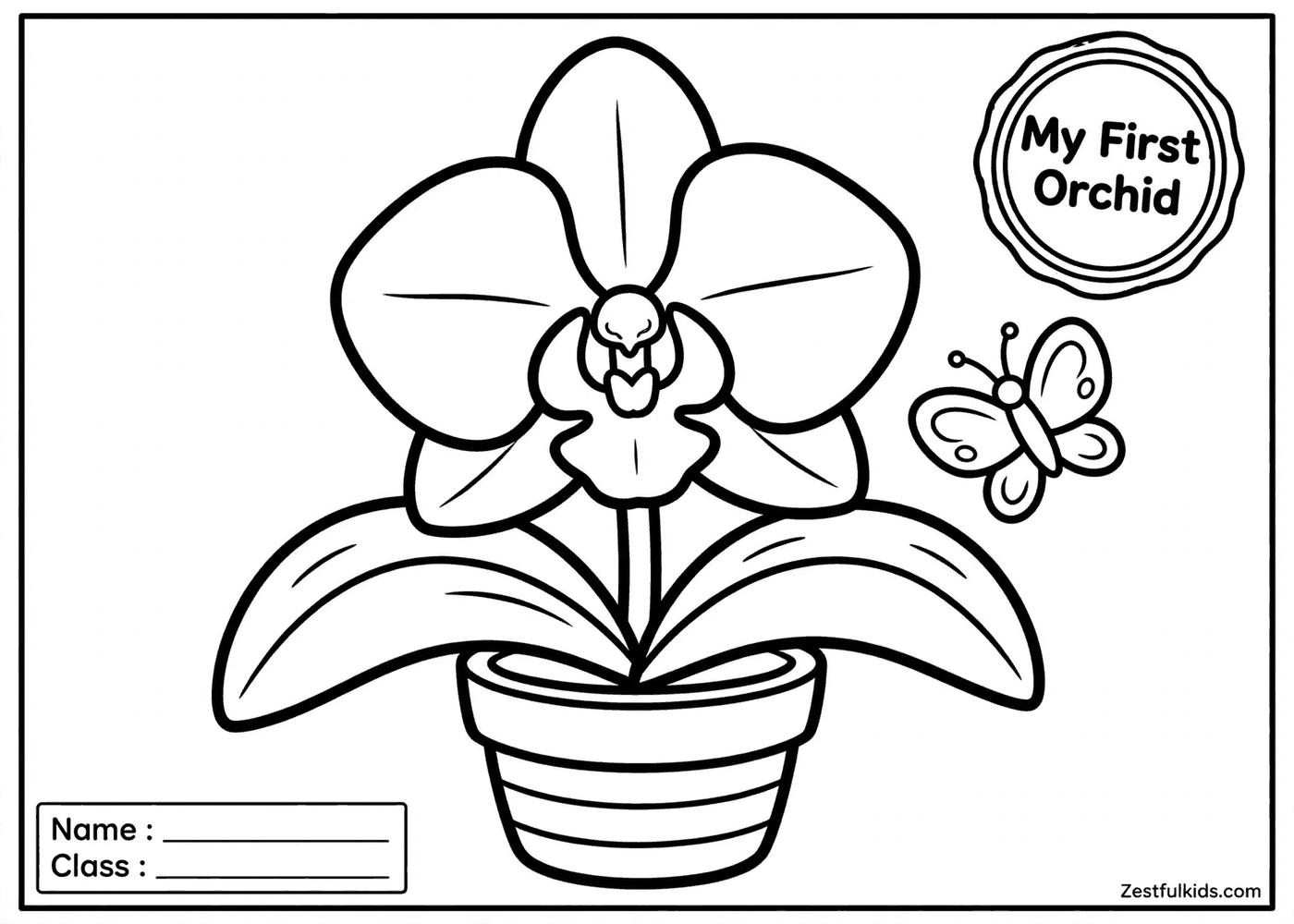
Step Inside an Imaginative Orchid Greenhouse
A greenhouse is a special place where plants grow in a protected environment, surrounded by glass panels that allow sunlight to enter. Inside, different kinds of flowers can be arranged on shelves, placed in pots, or displayed along garden paths. Orchids are particularly interesting because their flowers come in many shapes, sizes, and colors. Their delicate petals and distinctive centers provide plenty of inspiration for a creative coloring activity.
An orchid greenhouse also offers an imaginative setting for children who enjoy flowers and nature. They can picture themselves walking between rows of potted plants, discovering colorful blooms, and observing how different orchids grow. Even without a detailed background, the flower theme can inspire children to imagine their own greenhouse environment. They might add a sunny window, a watering can, or a small gardening table to extend the scene.
Unlike ordinary garden flowers, orchids have fascinating structures that make them recognizable. Many varieties have three sepals and three petals, with one petal modified into a distinctive structure called a lip. Children do not need to memorize botanical terms to enjoy coloring them, but noticing these unusual shapes can make the activity more interesting.
Explore Orchid Colors and Interesting Flower Patterns
Orchids are available in a remarkable range of natural colors. Some have pure white petals, while others display pink, purple, yellow, orange, or green shades. Certain varieties also have spots, stripes, or contrasting markings that make their flowers especially attractive. This variety gives children plenty of freedom when choosing their coloring combinations.
For a realistic appearance, children can use soft pink for the petals, dark purple for the flower centers, and green for the leaves. White orchids can be given light gray or pale yellow shading to create subtle differences between the petals and their surroundings. Those who prefer brighter artwork can experiment with unusual combinations, such as turquoise petals with violet centers or orange flowers against deep green foliage.
Here are several ideas to make the flowers visually interesting:
- Purple orchids: Combine lavender, violet, and deeper purple shades to create layers of color.
- Pink orchids: Use light pink on the petals and a stronger pink or magenta near the flower centers.
- White orchids: Leave some areas uncolored or use very light gray to suggest gentle shading.
- Yellow orchids: Mix pale yellow with golden orange for a warm floral appearance.
- Greenhouse leaves: Use different shades of green to distinguish younger leaves from mature foliage.
- Flower pots: Try terracotta brown, cream, blue, or other colors to give each pot its own character.
Colored pencils are useful for creating gradual changes between light and dark shades. Crayons are suitable for filling larger flower and leaf sections, while fine-tip markers can help children add stronger details. The best choice depends on the illustration and the materials available at home or school.
What Makes an Orchid Greenhouse Interesting?
A greenhouse is not simply a room filled with flowers. It provides a controlled environment where gardeners can manage growing conditions such as temperature, humidity, and light. Many orchids naturally grow in tropical regions, although different orchid species have different growing requirements. Some grow in soil, while others attach themselves to trees in their natural habitats.
These details can provide interesting conversation topics during coloring time. Parents and teachers can explain that orchids are not all grown in the same way and that some varieties prefer bright indirect light rather than strong direct sunlight. Children can also learn that healthy leaves and roots are important parts of a growing plant. Such observations connect the colorful illustrations with the real world without turning a relaxing activity into a complicated lesson.
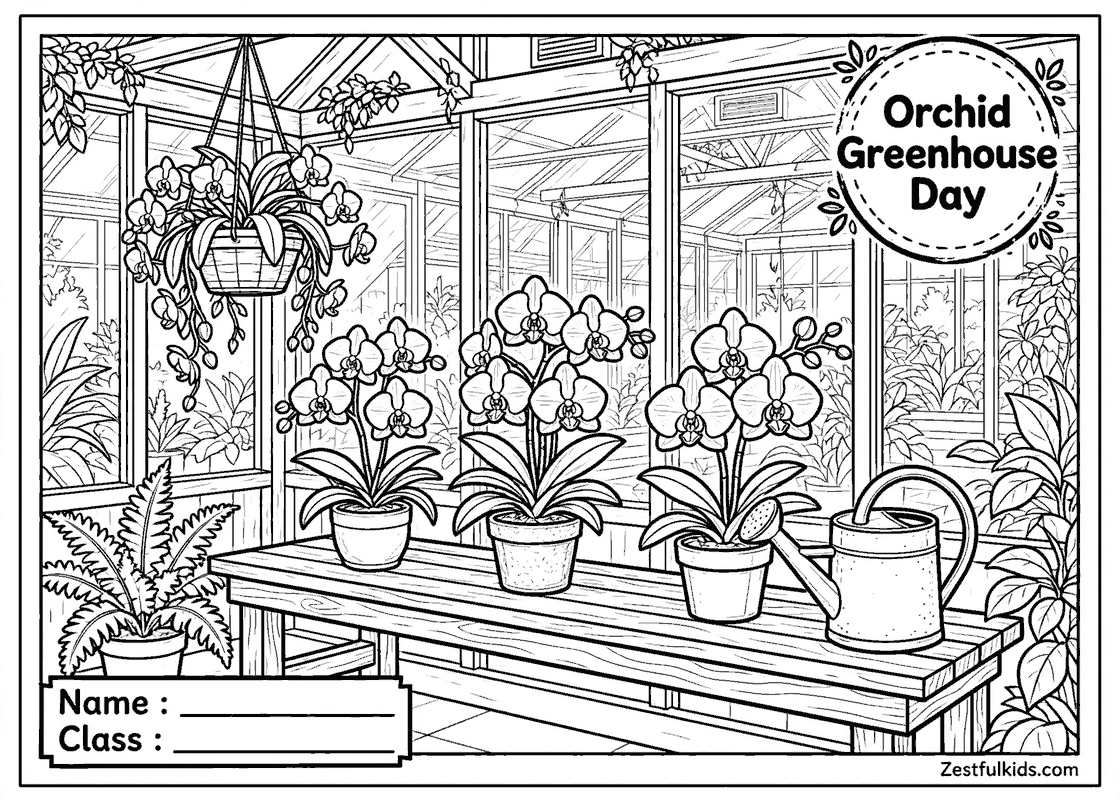
Another enjoyable detail is the arrangement of plants inside a greenhouse. Some orchids may be displayed in hanging baskets, while others grow in small pots on benches or shelves. Children can imagine how a gardener organizes the space so that every plant receives suitable care. If they want to expand their artwork, they can draw additional pots, labels, shelves, or watering equipment.
Turn the Coloring Activity Into a Mini Gardening Challenge
After finishing the orchid flowers, children can take the greenhouse theme a little further. Invite them to imagine that they are responsible for looking after their own miniature orchid collection. They can give each flower a name, decide where it should be placed, and describe the colors of its petals. This simple activity allows children to create a personal story around the plants they have colored.
A small drawing challenge can make the experience even more engaging. Children can add a greenhouse roof, glass windows, a garden bench, or a watering can if there is enough open space around the main illustration. They might also draw butterflies near the flowers or create a pathway between rows of plants. These additions are optional ideas rather than features that need to appear in every design.
For a classroom activity, teachers can invite students to create their own imaginary orchid collection. Each child can choose a different color theme and explain why they selected it. The finished artwork can be displayed together as a colorful classroom greenhouse. At home, parents can encourage children to compare their designs and talk about the flowers they would most like to see in a real greenhouse.
Enjoy More Nature-Inspired and Everyday Coloring Themes
Children who enjoy the peaceful atmosphere of an orchid greenhouse may also appreciate other subjects featuring plants, animals, and familiar surroundings. A collection of different themes gives young artists the opportunity to explore new subjects without repeating the same type of picture every time.
For example, children who love animals may enjoy exploring these cute cats. The subject offers a different creative direction, allowing them to experiment with fur patterns, facial expressions, and imaginative color combinations. Parents can use both themes during separate coloring sessions to introduce variety into their children’s activities.
Another interesting option is a mini bus theme for children who enjoy vehicles and everyday transportation. Unlike flowers, buses offer larger sections, windows, wheels, and body panels that can be filled with different colors. Switching between nature and transportation subjects can keep a printable activity collection fresh and enjoyable.
Preparing a Comfortable Coloring Session
A little preparation can make an orchid coloring activity easier to enjoy. Choose a flat surface with enough room for the printed illustration and coloring materials. If printing the design, check the preview first to ensure that the artwork fits within the printable area and that important details remain visible. Choose paper that is appropriate for the coloring tools children plan to use.
Keep colored pencils, crayons, or washable markers nearby so children can select their preferred materials. If they are using markers, placing an extra sheet underneath the paper can help protect the table from ink marks. Younger children may appreciate having a small selection of colors ready, while older children can experiment with more detailed shading and flower patterns.
Most importantly, allow children to make their own artistic decisions. An orchid does not have to follow a realistic color scheme to look interesting, and a greenhouse does not need to resemble a professional botanical garden. Whether children choose delicate pastel flowers or bold tropical colors, the activity gives them room to create a greenhouse scene that reflects their imagination.
