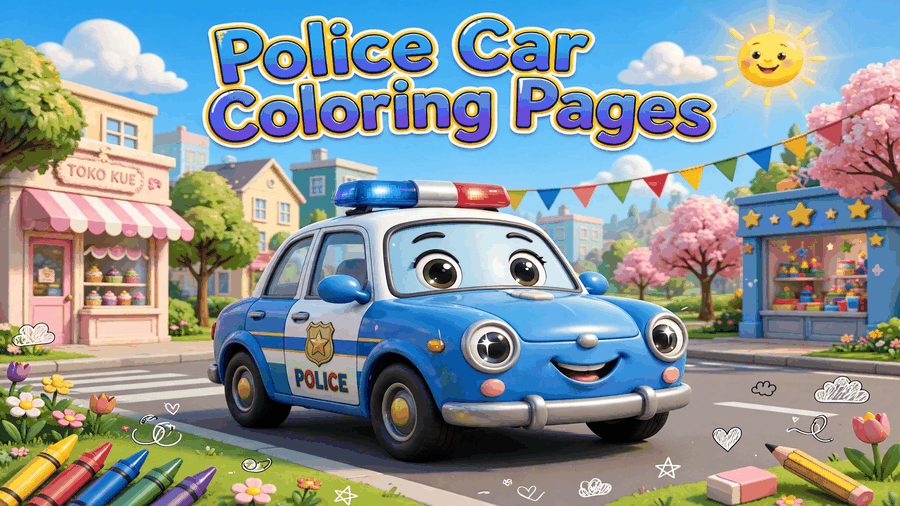
Police Car Coloring Pages bring the excitement of emergency vehicles into a child’s creative time. With familiar car shapes, flashing lights, and imaginative road scenes, these printables offer an enjoyable way to explore colors while learning about the important role of police vehicles in everyday life.
Police cars are easy for children to recognize, yet there are plenty of interesting details that make them enjoyable to color. From their distinctive roof lights to their marked doors and sturdy wheels, each part offers an opportunity to experiment with different shades and create a unique-looking vehicle. Whether children enjoy drawing cars, imagining exciting adventures, or learning about community helpers, this theme provides a practical starting point for a fun activity at home or in the classroom.
What Makes Police Cars Interesting to Color?
Unlike ordinary passenger cars, police vehicles have a recognizable appearance that often makes children curious about their purpose. Their special markings, warning lights, and communication equipment help distinguish them from other vehicles on the road. These details also give children several areas to explore when choosing colors.
A traditional police car is commonly associated with black and white bodywork, blue or red warning lights, and dark tires. However, children do not have to follow a realistic color scheme. They can imagine a bright blue patrol car, a green police vehicle, or even a colorful car from an imaginary town. Allowing children to make their own choices keeps the activity enjoyable and gives every finished picture a personal touch.
The shape of the vehicle is another interesting feature. A police car may have a familiar sedan design, a larger SUV body, or a compact shape suited to city streets. Looking at these differences can encourage children to notice how vehicles can have different sizes and purposes.
Choosing a Coloring Style That Suits Your Child
Not every child approaches a coloring activity in the same way. Some enjoy filling large spaces with broad strokes, while others prefer working carefully on smaller details. Choosing an illustration that matches a child’s interests and comfort level can make the experience more enjoyable.
Simple Police Car Designs
A simple police car illustration is a good starting point for children who enjoy recognizable shapes without too many small sections. Large areas on the body, windows, wheels, and roof lights make it easier to experiment with basic colors. Children can begin with the main vehicle and gradually add details if they want to make the picture more interesting.
Parents and teachers can introduce a small coloring challenge by asking children to choose a color for the car body before moving on to the windows and wheels. This keeps the activity relaxed without making it feel like a school assignment.
More Detailed Police Vehicle Illustrations
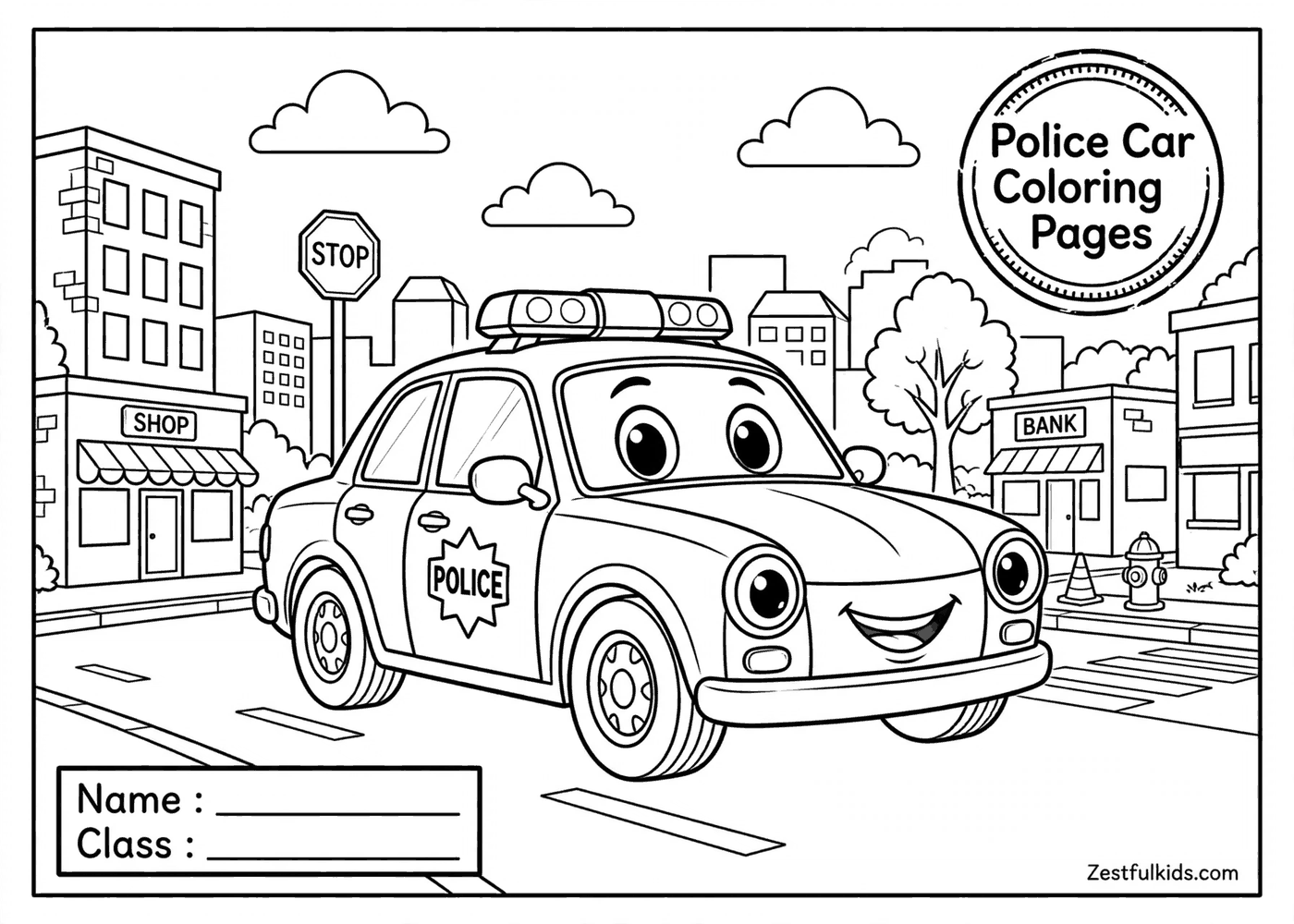
Children who enjoy spending more time on artwork may prefer illustrations with additional vehicle details. Markings, headlights, side mirrors, roof equipment, and surrounding scenery can provide more areas to explore. These elements also offer opportunities to combine several coloring techniques.
For example, children can use a darker shade around the tires, a lighter shade on the windows, and contrasting colors for the warning lights. If the illustration includes a road or nearby buildings, they can extend their color choices beyond the vehicle itself.
Creative Color Ideas for Police Car Coloring Pages
Realistic colors are a natural choice, but imaginative combinations can make each picture feel different. Children can use traditional black and white for the vehicle body or create an entirely fictional police car with bright and cheerful colors.
Blue is a popular choice for police vehicle details, particularly around the roof lights and markings. Red can be used for warning lights, while gray or black works well for tires, bumpers, and other darker sections. A little yellow can add contrast to headlights or decorative details.
The background can also make a difference. A simple gray road, green roadside grass, blue sky, or colorful city buildings can turn an ordinary vehicle illustration into a complete scene. Children might imagine their police car driving through a quiet neighborhood, passing a school, or helping people in a busy town.
Colored pencils are useful for adding controlled details, especially around small sections. Crayons work well for larger spaces, while washable markers can produce stronger colors. If children use markers, placing an extra sheet of paper underneath the printable can help protect the surface below.
Turning a Coloring Activity into a Community Helper Lesson
Police cars are connected to an important part of community life. They help children explore the idea that different people have different responsibilities in keeping public spaces safe and organized.
During coloring time, adults can explain that police officers may use vehicles to travel between locations, respond to emergencies, direct traffic, and assist members of the community. The explanation can remain simple and appropriate for the child’s understanding.
Children can also describe what they notice about the vehicle. They might identify its wheels, headlights, doors, windows, or warning lights. These conversations make the activity more interactive without requiring additional worksheets or complicated instructions.
Another enjoyable idea is to invite children to imagine a small town and decide where their police car should go. It could travel past a park, visit a school, or drive along a neighborhood street. They can describe the surroundings while adding colors to the picture.
Combine Vehicle Art with Other Creative Themes
Children who enjoy coloring police cars may also be interested in other printable subjects. Exploring different themes gives them a chance to move between vehicles, nature, animals, and imaginative scenes without repeating the same type of activity.
For a softer and more nature-inspired change, cute wildflowers offer an opportunity to experiment with flower petals, leaves, and garden backgrounds. Children can use bright colors for the blossoms and different shades of green for the surrounding plants.
For another activity that encourages imaginative play, dinosaurs playing with building blocks bring together friendly prehistoric creatures and familiar toys. This theme can be especially interesting for children who enjoy creating stories around the pictures they color.
Switching between these subjects helps keep printable activities varied. A vehicle illustration can inspire conversations about transportation, while flowers and dinosaurs offer completely different creative possibilities.
Making the Most of a Police Car Coloring Session
A comfortable coloring space can make the activity easier to enjoy. Prepare the chosen printable, place a selection of coloring tools nearby, and give children enough room to work without feeling rushed. It is helpful to let them choose their preferred colors rather than expecting every vehicle to look exactly like a real police car.
Before printing, check the available page preview and printer settings. Make sure the illustration fits within the printable area and that important details are not cut off by the margins. Standard printer paper is generally suitable for crayons and colored pencils, while thicker paper may be preferable when children plan to use markers.
Once the picture is finished, children can give their police car a name and invent a short story about its daily activities. They might describe where it travels, whom it helps, or what kind of neighborhood it patrols. Parents can write down the story or encourage older children to create a few sentences of their own.
Finished artwork can also be displayed on a bedroom wall, classroom board, or family art corner. Seeing their work displayed gives children an opportunity to share their creative choices with others.
Police car coloring activities do not need complicated instructions or elaborate materials to be enjoyable. A familiar vehicle, a handful of colors, and a little imagination are enough to create a memorable creative session. With different coloring approaches and opportunities for storytelling, this theme can become a welcome addition to children’s printable activities at home or school.
