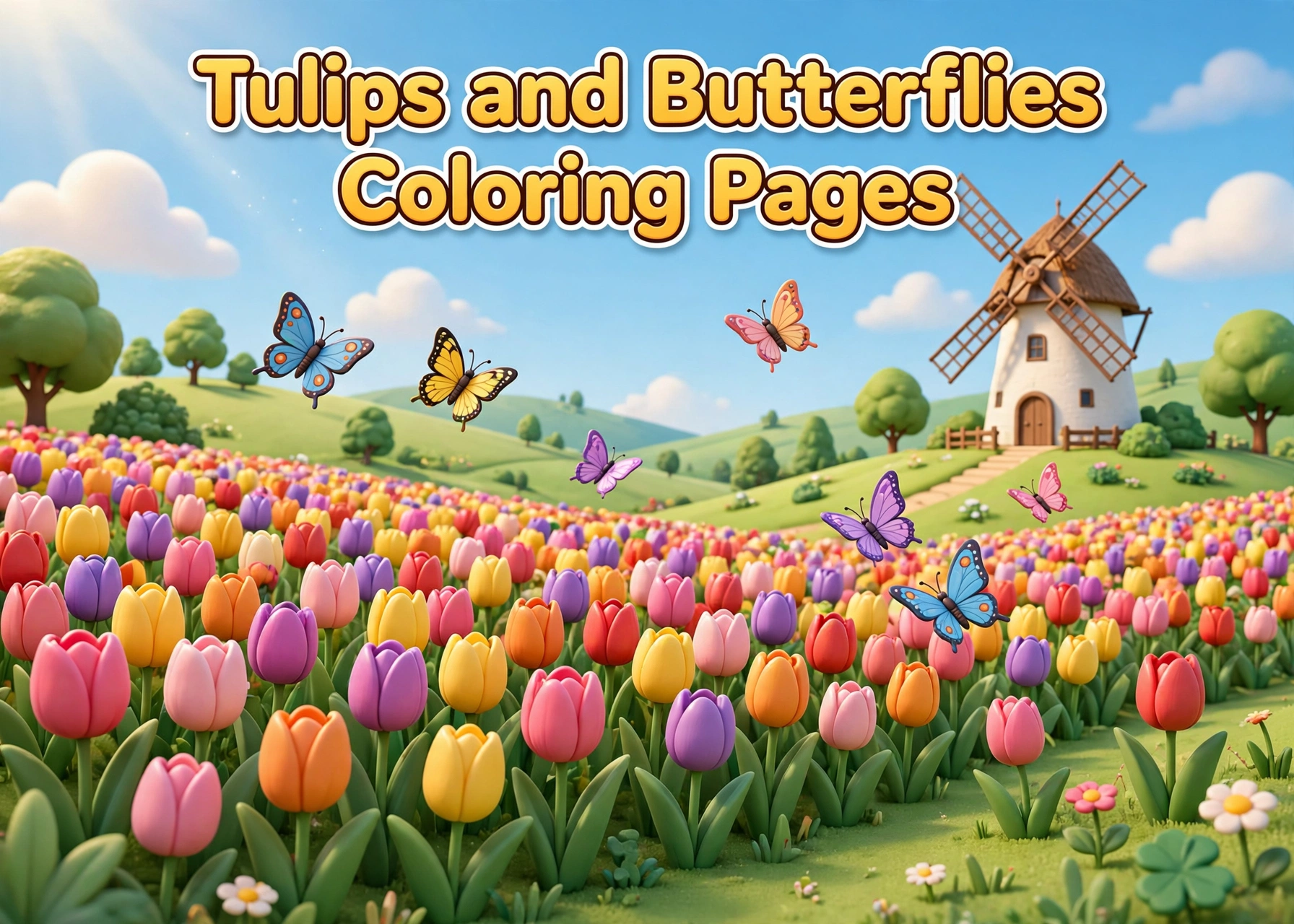
Tulips and Butterflies Coloring Pages bring together two beautiful elements of spring: colorful flowers and delicate butterflies. These printable activities invite children to explore nature through art, experiment with different color combinations, and create their own cheerful garden scenes.
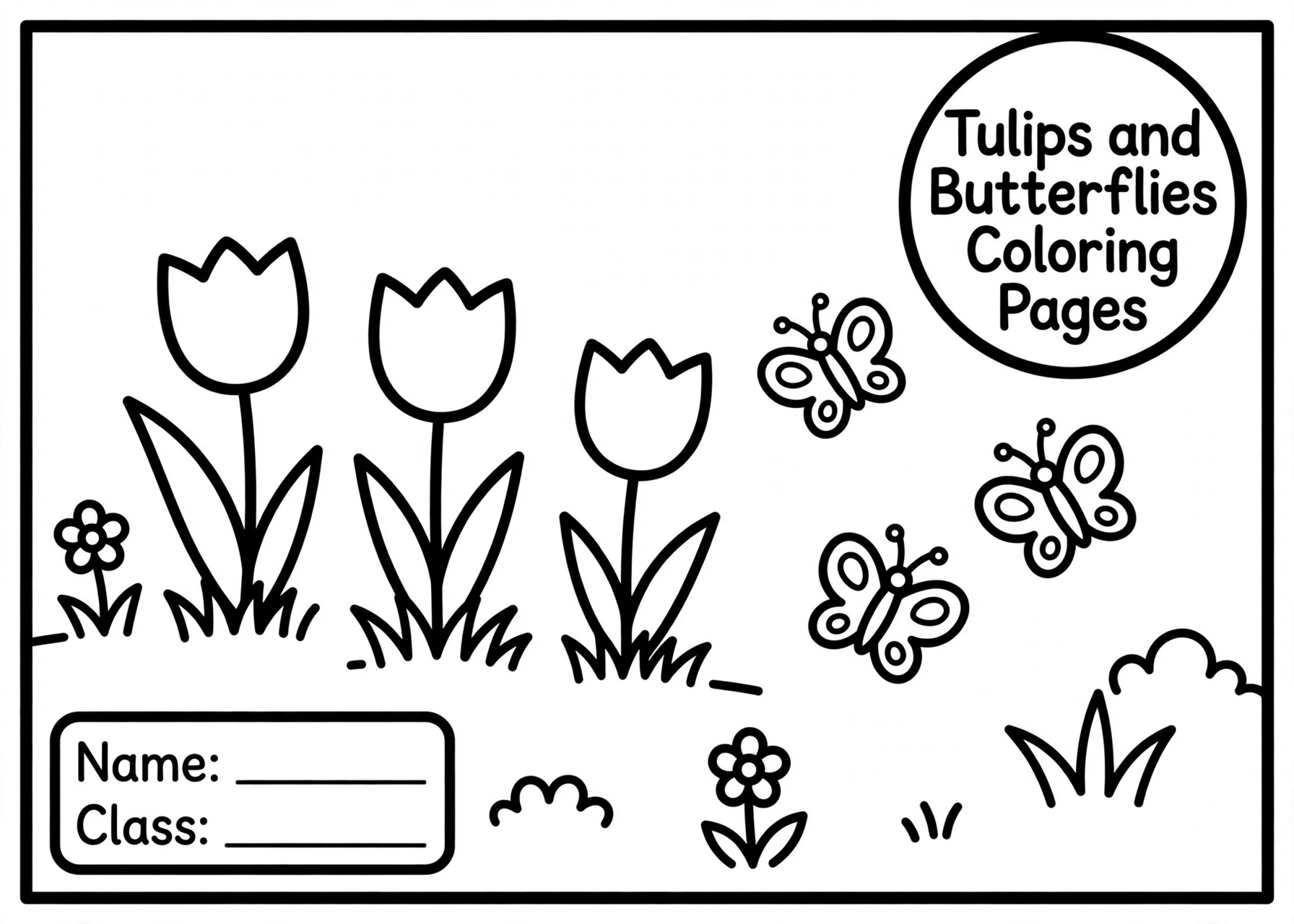
A Little Garden Full of Color and Movement
Tulips and butterflies make an interesting combination because they represent two different aspects of a lively garden. Tulips stand upright with their distinctive cup-shaped flowers, while butterflies bring movement with their delicate wings and graceful flight. Together, they create a nature-inspired theme that children can enjoy exploring through coloring.
Tulips are popular spring flowers that grow from bulbs. Their flowers usually have a simple cup-like shape, with smooth petals that meet near the top. Depending on the variety, tulips can appear in many colors, including red, yellow, pink, purple, orange, and white. Their green stems and long leaves provide a natural contrast to the bright petals.
Butterflies add another layer of visual interest. Their wings often feature symmetrical patterns, spots, lines, and contrasting colors. Some species have bright orange and black markings, while others display shades of blue, yellow, white, or brown. These natural variations give children plenty of inspiration when deciding how to decorate their butterfly illustrations.
Exploring Colors Through Tulips and Butterflies Coloring Pages
One of the most enjoyable parts of this theme is the opportunity to combine different colors without needing to follow a strict pattern. Children can choose realistic shades inspired by actual gardens or create imaginative designs that reflect their own preferences.
For tulips, several color combinations work particularly well:
- Red and green: A classic combination that creates a familiar garden appearance.
- Yellow and orange: Warm shades that give flowers a cheerful and sunny look.
- Pink and purple: A soft combination for children who enjoy gentle floral colors.
- White and light pink: Useful for creating a delicate appearance with subtle differences between petals.
- Purple and blue: An imaginative combination for children who like experimenting with unusual flower colors.
Butterfly wings offer even more opportunities for creativity. Children can use matching colors on both sides of the wings or create contrasting patterns. For example, orange wings with black spots can resemble a monarch butterfly, while blue and turquoise shades can produce a more imaginative design.
Parents can encourage children to choose a small group of colors before starting. This can help create a coordinated picture, especially when the flowers and butterflies appear together in the same composition.
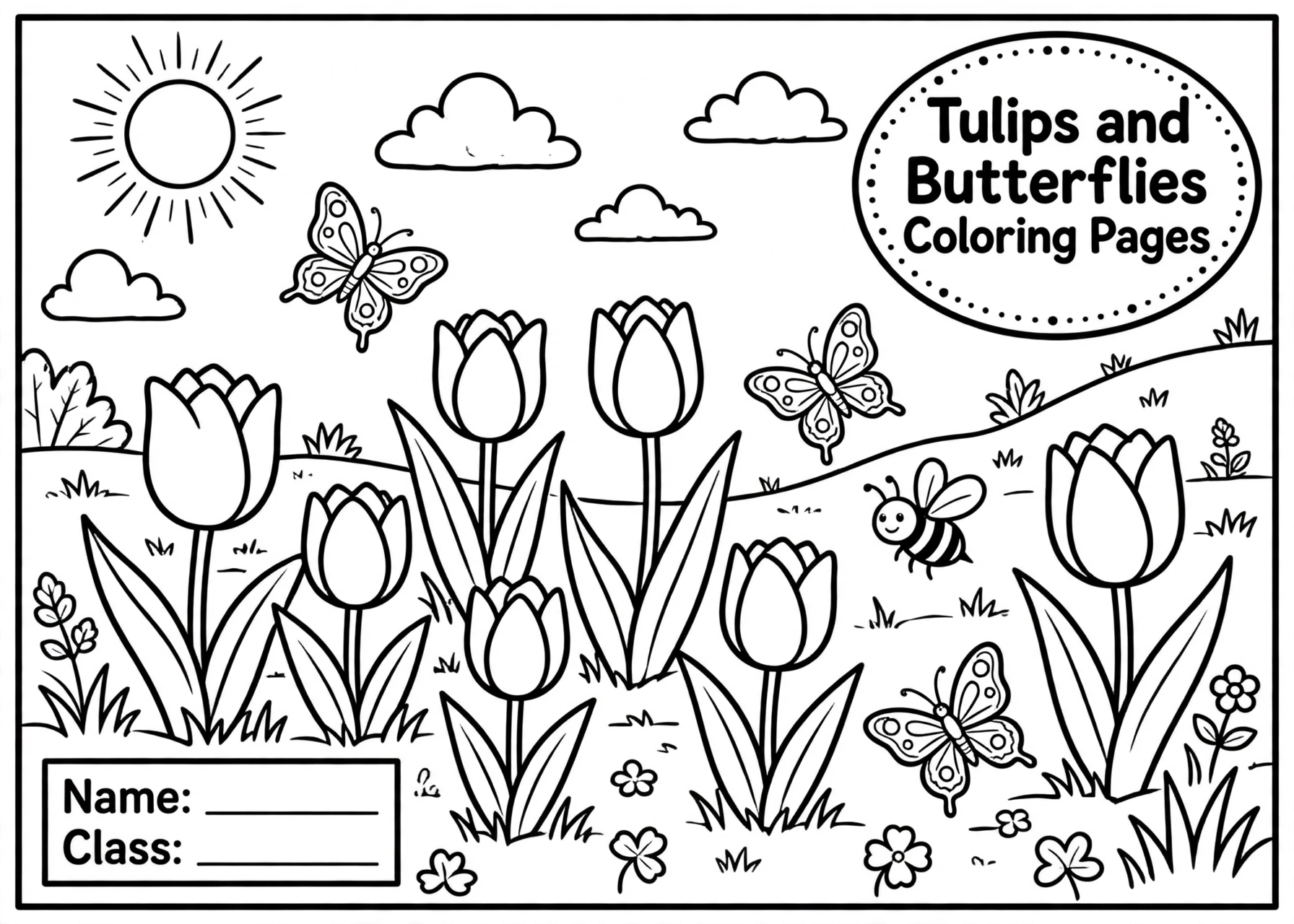
Understanding the Small Details of Flowers and Butterflies
A tulip may look simple at first, but its structure contains several interesting details. The petals form a rounded cup, while the stem supports the flower above its long, narrow leaves. Some tulip varieties have smooth petal edges, whereas others have pointed or slightly fringed shapes.
These differences can become part of the coloring experience. Children can use lighter shades near the edges of the petals and darker tones closer to the center to create a sense of depth. Green pencils can also be layered to distinguish the stem from the leaves.
Butterflies have their own recognizable features. Their bodies are divided into sections, and they have six legs, two antennae, and usually two pairs of wings. The patterns on their wings vary between species, making them especially interesting subjects for observation.
For a simple coloring challenge, children can decorate each butterfly wing with a repeated pattern. Small circles, curved lines, dots, and stripes are easy options. They can also make both sides of the wings similar, creating a balanced appearance.
Turn a Flower Illustration into a Garden Scene
The combination of tulips and butterflies naturally inspires outdoor scenery. Even when an illustration has a simple background, children can imagine additional details to make their artwork feel more complete.
A spring garden is a good starting point. Green grass, small stones, leafy plants, and patches of sunshine can help create a cheerful outdoor setting. Children might also add a few clouds, distant trees, or other flowers if there is enough open space around the main illustration.
Another idea is to create a butterfly garden. Children can imagine several butterflies visiting different flowers, moving from one colorful bloom to another. They can give each butterfly a different wing pattern and use varied shades for the tulips.
For a more imaginative activity, invite children to invent a name for their garden. They might call it the Rainbow Tulip Garden or the Butterfly Flower Meadow. After coloring, they can describe what their garden looks like and which colors they chose for their favorite flower.
Simple Coloring Techniques for Better Results
Different coloring materials can produce different effects on flower and butterfly illustrations. Choosing the right tools depends on the child’s comfort and the amount of detail in the design.
Colored pencils are useful for creating gentle transitions between shades. Children can begin with light pink or yellow and gradually add darker colors to selected petal areas. They are also suitable for filling small butterfly patterns without covering nearby outlines.
Crayons work well for larger spaces, such as flower petals, leaves, and garden backgrounds. Their broad coloring surface makes them practical for children who prefer filling areas with simple strokes.
Washable markers are another option when bright, solid colors are preferred. They can make butterfly wings particularly striking, although children should check that the paper is suitable for marker use to reduce the possibility of ink showing through.
A useful approach is to color the main flowers first, followed by the butterflies and any surrounding details. This gives children a clear starting point while allowing them to make adjustments as the picture develops.
Extend the Activity with Other Nature-Inspired Creatures
Children who enjoy butterflies may also be interested in exploring other small creatures found in natural environments. A visit to the imaginary seaside, for example, introduces a completely different setting with fascinating marine animals. These baby crab illustrations offer another subject for children who like discovering different shapes and features through art.
For a woodland-inspired activity, hedgehogs provide an interesting contrast to delicate butterflies. Their rounded bodies and distinctive spines create a different coloring experience, especially when combined with flowers and garden details. Children can explore these hedgehog and flower illustrations to continue their nature-themed creative activities.
Combining different subjects can also inspire children to create their own collection of nature artwork. They might arrange their finished pictures into groups based on gardens, forests, or animals.
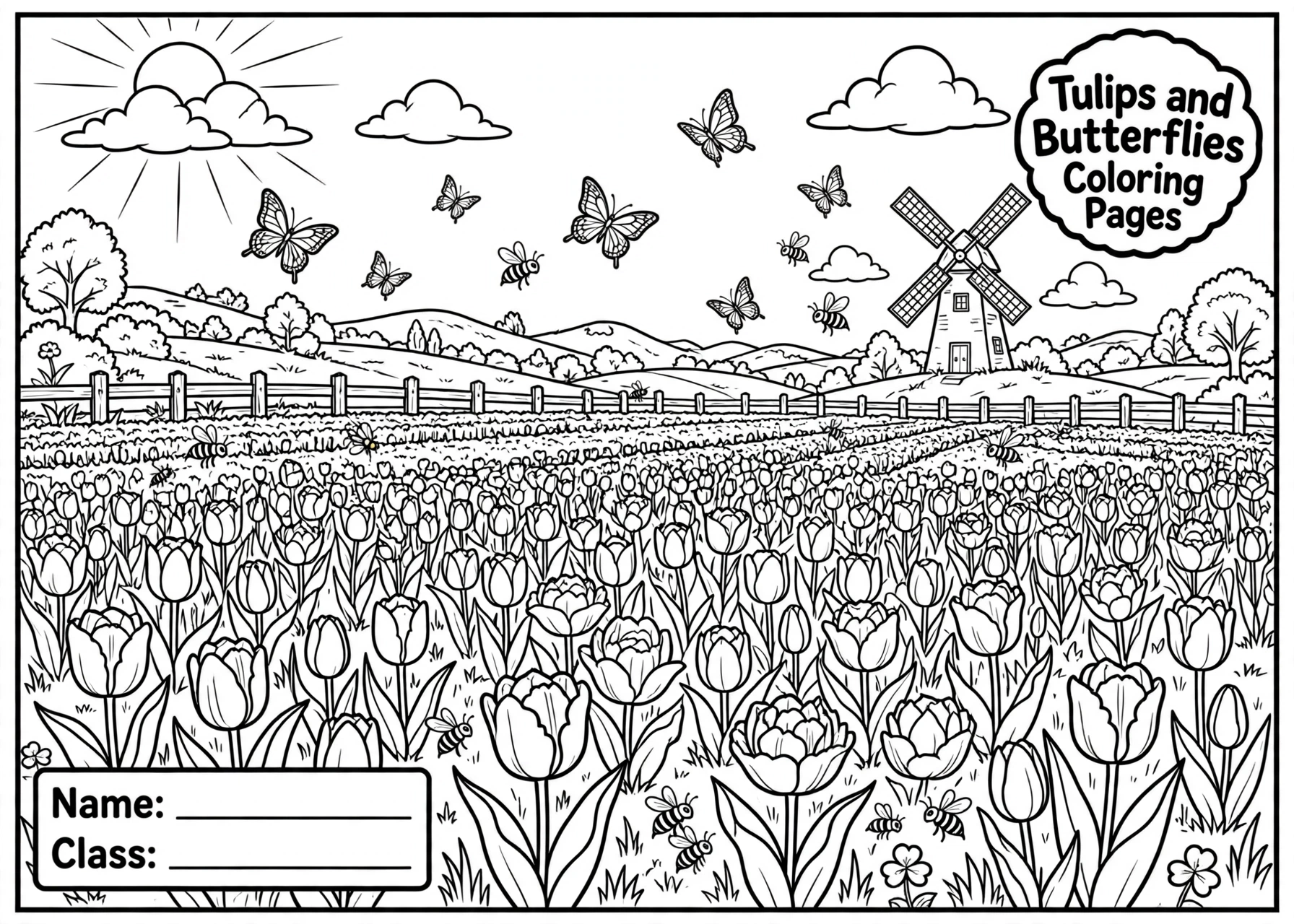
Preparing a Comfortable Coloring Session
A little preparation can make a coloring activity easier for families and classrooms. Before printing, check the available design and use the print preview to see how it fits on the selected paper. Make sure the illustration is not unintentionally cropped and that the outlines remain visible.
Prepare a few coloring materials within easy reach, such as crayons, colored pencils, or washable markers. A flat table and comfortable seating are helpful, particularly when children want to spend extra time decorating small details.
Parents and teachers can also make the activity more interactive by discussing the colors and patterns children notice in nature. They might talk about why butterflies visit flowers or how tulips grow from bulbs. These conversations can happen naturally while children work, without turning the coloring session into a formal lesson.
Tulips and butterflies offer a wonderful combination of floral beauty and natural movement. Through different colors, wing patterns, and imaginative garden settings, children can create artwork that reflects their own ideas while enjoying a simple connection with the natural world.
