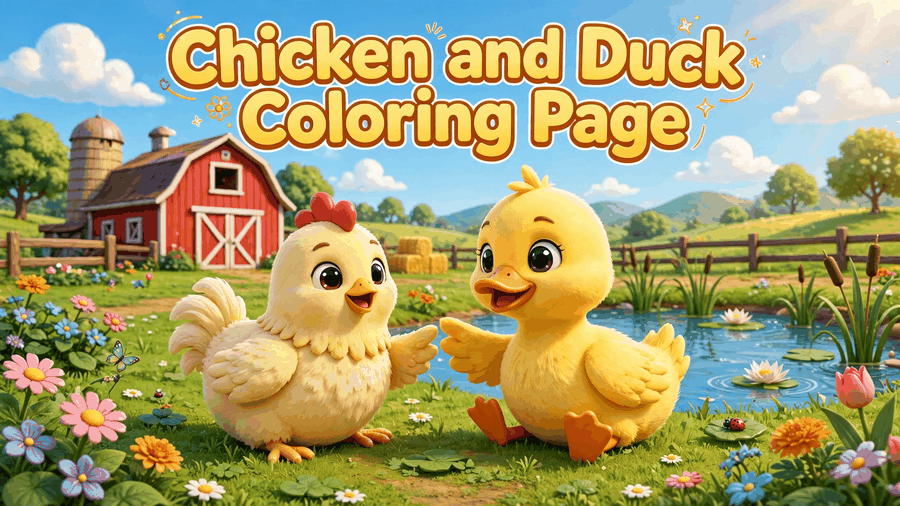
Chicken and Duck Coloring Page brings familiar farmyard animals to life through creative coloring. Children can explore their differences, imagine playful farm scenes, and enjoy a simple activity at home or school.
Discover the Charm of Chickens and Ducks Through Coloring
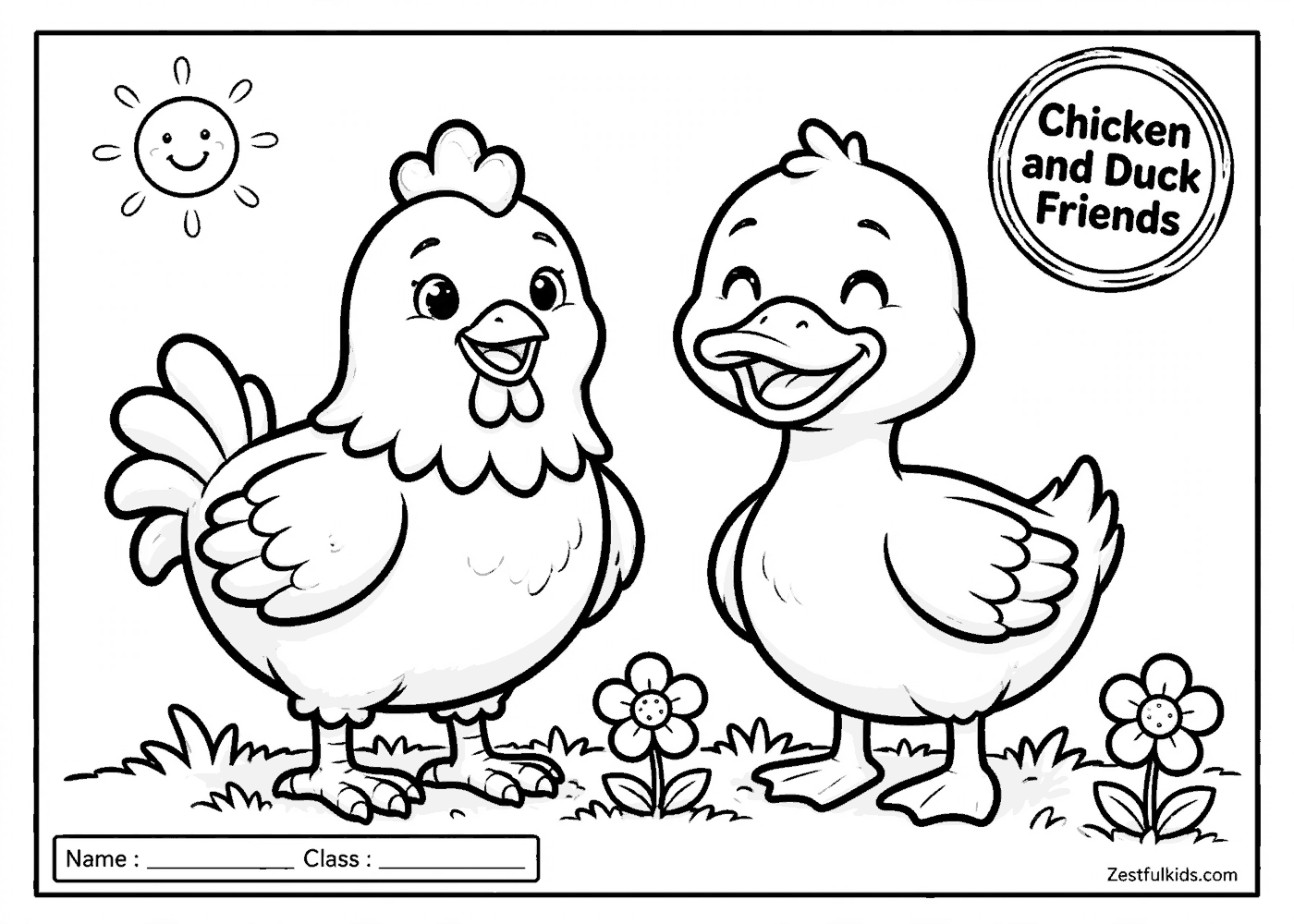
Chickens and ducks are two familiar farm animals, but each has its own distinctive appearance and personality. Chickens are often recognized by their combs, small beaks, rounded bodies, and feathered wings. Ducks have flatter bills, webbed feet, and bodies that are naturally suited to swimming. These differences make them interesting subjects for children to explore through coloring.
A chicken might be imagined scratching the ground in search of food, while a duck could be pictured waddling near a pond. Even when the illustrations focus only on the animals, children can use their imagination to create stories about what they are doing. They may picture a mother hen looking after her chicks or a duck searching for tiny insects near the water. Such familiar farmyard situations make the coloring experience easy to enjoy without requiring complicated explanations.
The combination of chickens and ducks also offers a nice opportunity to explore different shapes. A chicken’s comb and tail feathers can be colored with contrasting shades, while a duck’s bill and webbed feet provide interesting details. Children can decide whether to use realistic animal colors or create imaginative combinations.
Choosing Colors for Chickens and Ducks
One enjoyable part of coloring farm animals is deciding which colors best represent their appearance. Chickens come in different feather colors, including white, brown, black, golden, and reddish shades. Children can use these colors to create a familiar-looking farm chicken or experiment with unusual patterns. A bright red or orange comb can add a recognizable detail to the illustration.
Ducks offer another range of coloring possibilities. Yellow is a popular choice for ducklings, while adult ducks can have brown, white, gray, or darker feathers. Some ducks also have green or blue patches on their wings, depending on the species. Children do not need to follow realistic color combinations, especially when they want to create a cheerful picture using their favorite crayons.
Here are a few simple coloring ideas:
- Farm chickens: Combine brown, golden yellow, white, and reddish shades for the feathers.
- Yellow ducklings: Use soft yellow for the body, orange for the bill, and a lighter shade for the belly.
- Adult ducks: Experiment with brown, gray, white, green, or blue feather patterns.
- Farmyard details: Add green grass, brown soil, blue water, or colorful flowers if the illustration includes open background areas.
Colored pencils are useful for smaller details, such as feathers, eyes, and beaks. Crayons work well for filling larger areas, while washable markers can produce stronger colors when used carefully with suitable paper.
What Children Can Notice While Coloring
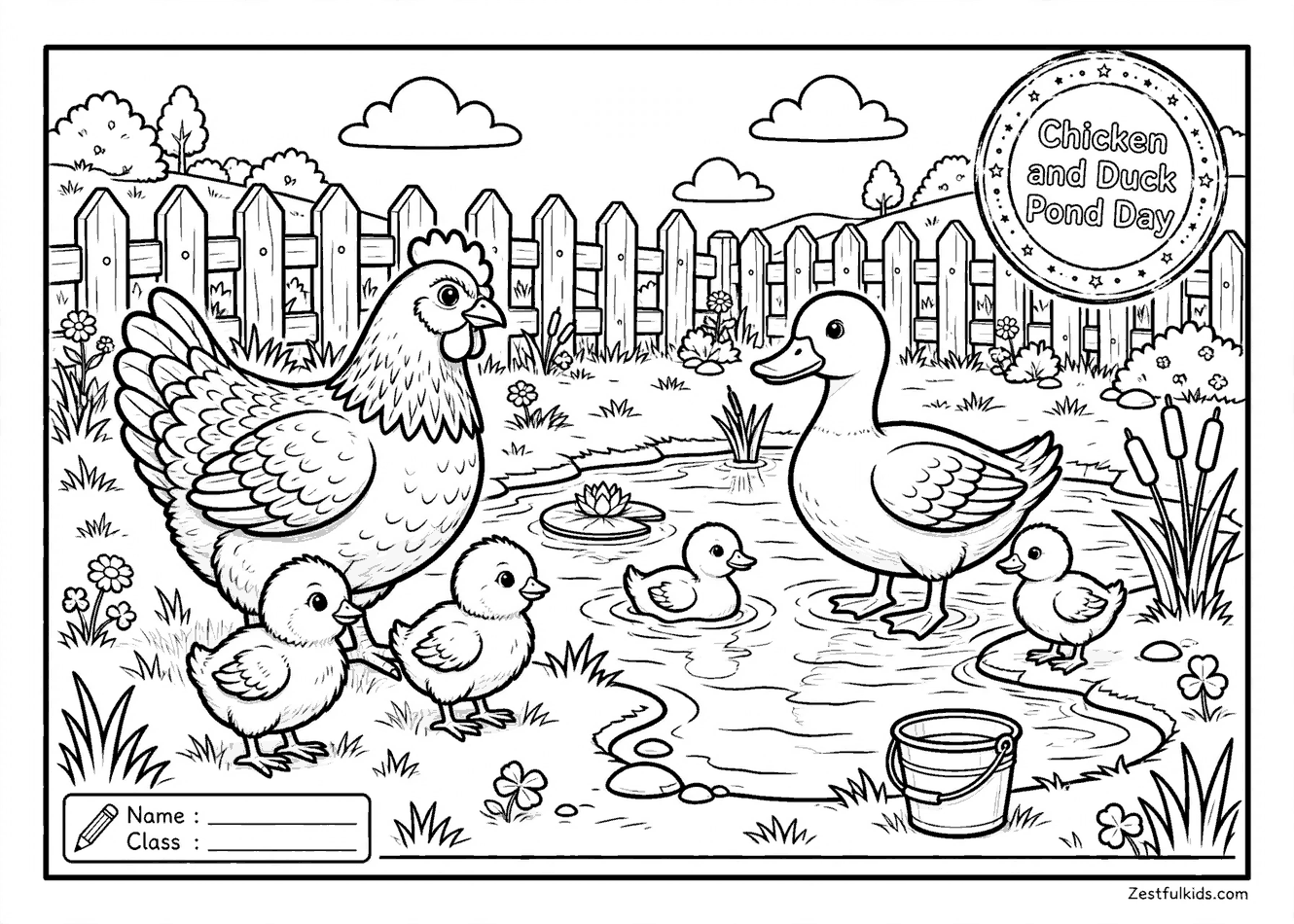
A chicken and duck coloring activity can introduce simple observations about two animals that are often seen on farms. Children can compare their feet, bills, feathers, and body shapes as they work. For example, chickens have separate toes with claws that help them walk and scratch the ground. Ducks have webbed feet that help them move through water more efficiently.
These details can become part of a relaxed conversation between parents, teachers, and children. An adult might point out that ducks often enjoy swimming, while chickens spend much of their time walking around the ground. Children can then describe which animal they find more interesting and explain their choices. This approach keeps the activity enjoyable while introducing basic animal knowledge naturally.
Another interesting detail is the difference between adult birds and their young. A baby chicken is called a chick, while a baby duck is called a duckling. Children may enjoy imagining how a group of chicks stays close to its mother hen or how little ducklings follow an adult duck toward a pond. These familiar animal relationships can inspire additional stories and creative conversations.
Turn a Simple Farm Animal Picture Into a Story
Coloring does not have to end when every section of the illustration has been filled. Once the chickens and ducks are finished, children can create a short story based on the animals they have colored. They might imagine a chicken meeting a duck for the first time or a group of ducklings exploring a farmyard together. If the picture has enough open space, they can also draw additional details around the animals.
Parents and teachers can encourage children to give their animals names and describe their imaginary activities. One child might create a story about a curious duck that loves visiting a vegetable garden, while another might imagine a chicken searching for food with its chicks. These small storytelling activities provide a natural connection between drawing, coloring, and language practice.
Children who enjoy animal-themed printables may also like exploring a hedgehog and flower activity. It offers another opportunity to combine an animal subject with natural elements. Comparing different animals can also inspire children to notice how their bodies, surroundings, and daily activities vary.
Make Coloring Time More Enjoyable at Home or School
Chicken and duck illustrations can fit into several everyday activities. At home, parents can introduce them during a quiet afternoon, a weekend craft session, or a farm animal learning theme. Teachers may include the activity in classroom lessons about domestic animals, birds, or life on a farm. Caregivers can also use it as a relaxed creative option when children want something different from their usual toys and games.
For a small group activity, each child can choose a different color combination for the animals. Afterward, they can show their pictures and explain why they selected particular shades. If everyone works on the same type of animal, the finished pictures can still look completely different because each child makes individual choices.
Another option is to connect the coloring activity with a discussion about animal sounds. Children can imitate a chicken’s clucking or a duck’s quacking and talk about where they might hear these sounds. Adults can introduce simple words such as feathers, wings, beak, nest, pond, chick, and duckling. The words can be repeated naturally while children point to the relevant parts of their illustrations.
For children who enjoy lively animal scenes, a puppy and kitten jumping in puddles offers a different theme involving playful animals and outdoor surroundings. It can be a nice addition to a collection of printable activities featuring familiar creatures.
Simple Tips for Preparing a Printable Coloring Activity
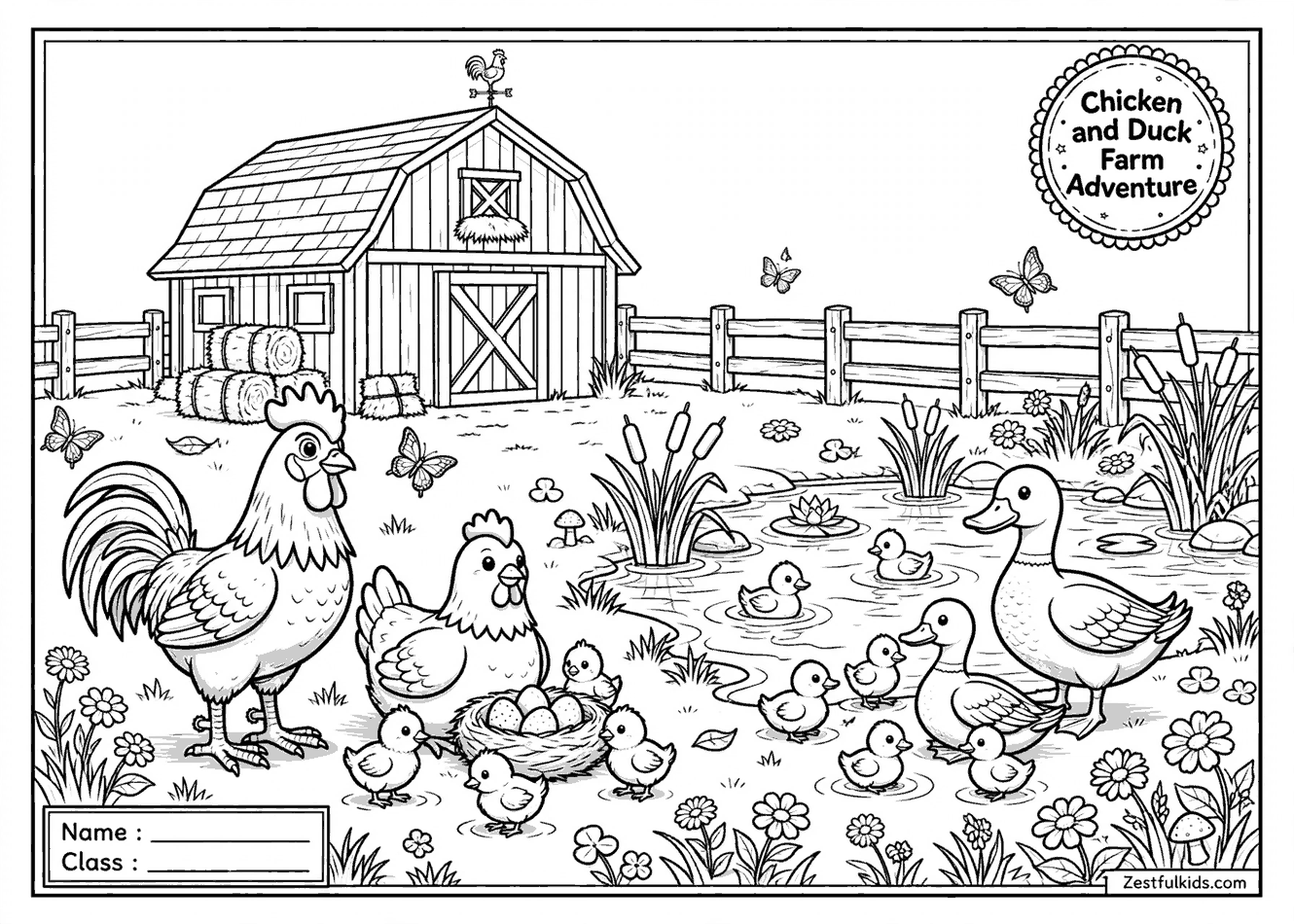
Before starting, choose a comfortable place where children have enough room to spread out their coloring materials. If the illustration is being printed, check the print preview to make sure the entire design is visible and that no important details are cut off. Select paper that works with the coloring tools available, especially if children prefer markers or heavier coloring pressure. Keeping crayons, pencils, and other supplies within reach can also make the activity easier to manage.
Encourage children to color at their own pace rather than focusing on making every section look perfect. Some may prefer carefully filling each feather, while others may enjoy adding imaginative patterns or extra farmyard details. Both approaches are perfectly suitable for a creative activity.
The Chicken and Duck Coloring Page can become more than a way to fill empty spaces with color. It gives children a familiar animal theme to explore through observation, imagination, and simple storytelling. Whether used during family craft time or as part of a classroom activity, these farmyard birds offer an enjoyable starting point for creative expression.
