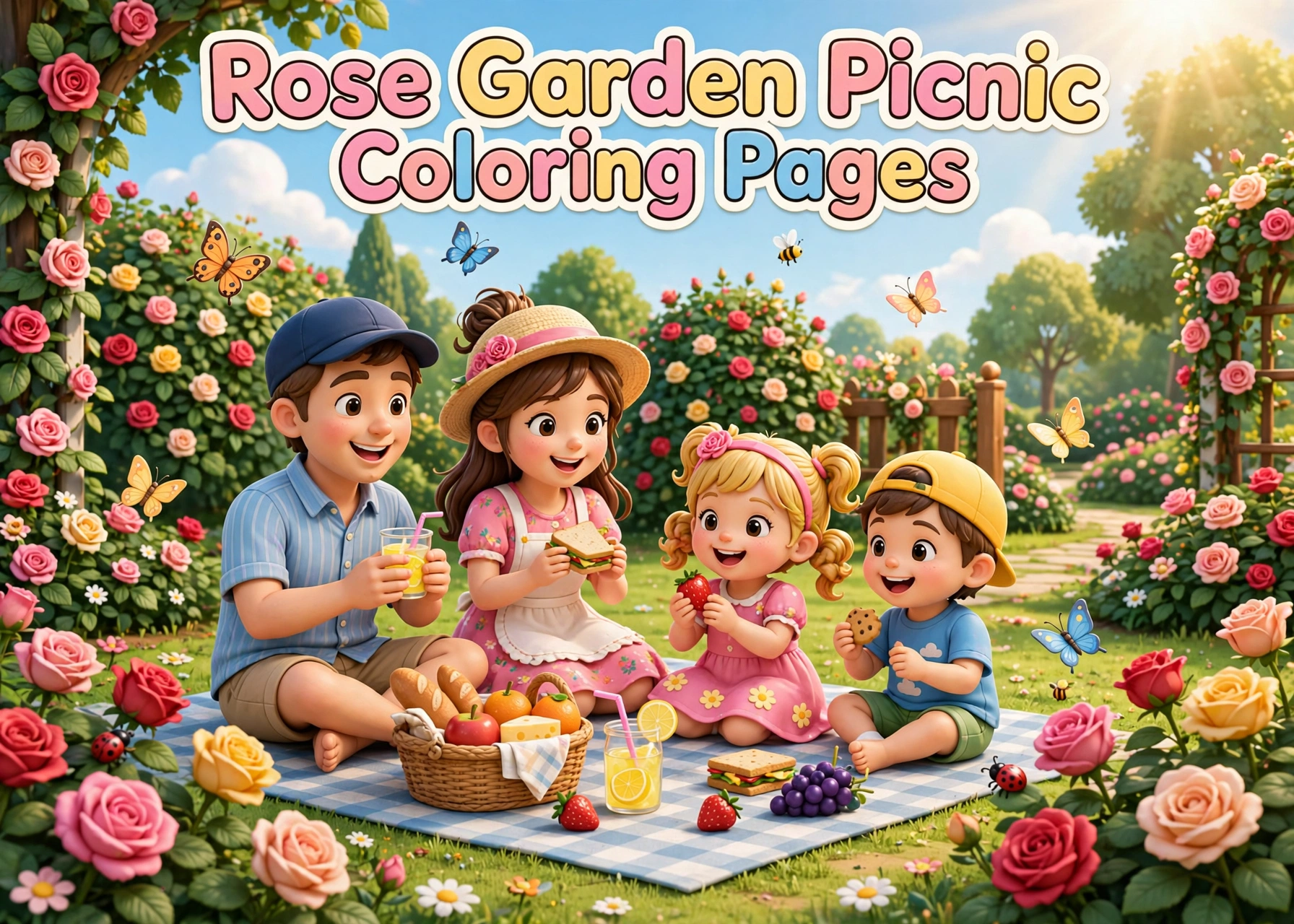
Rose Garden Picnic Coloring Pages bring together blooming flowers, outdoor scenery, and the simple pleasure of sharing a picnic in a garden. These charming designs give children an opportunity to explore colors while imagining a peaceful day surrounded by roses, fresh air, and nature.
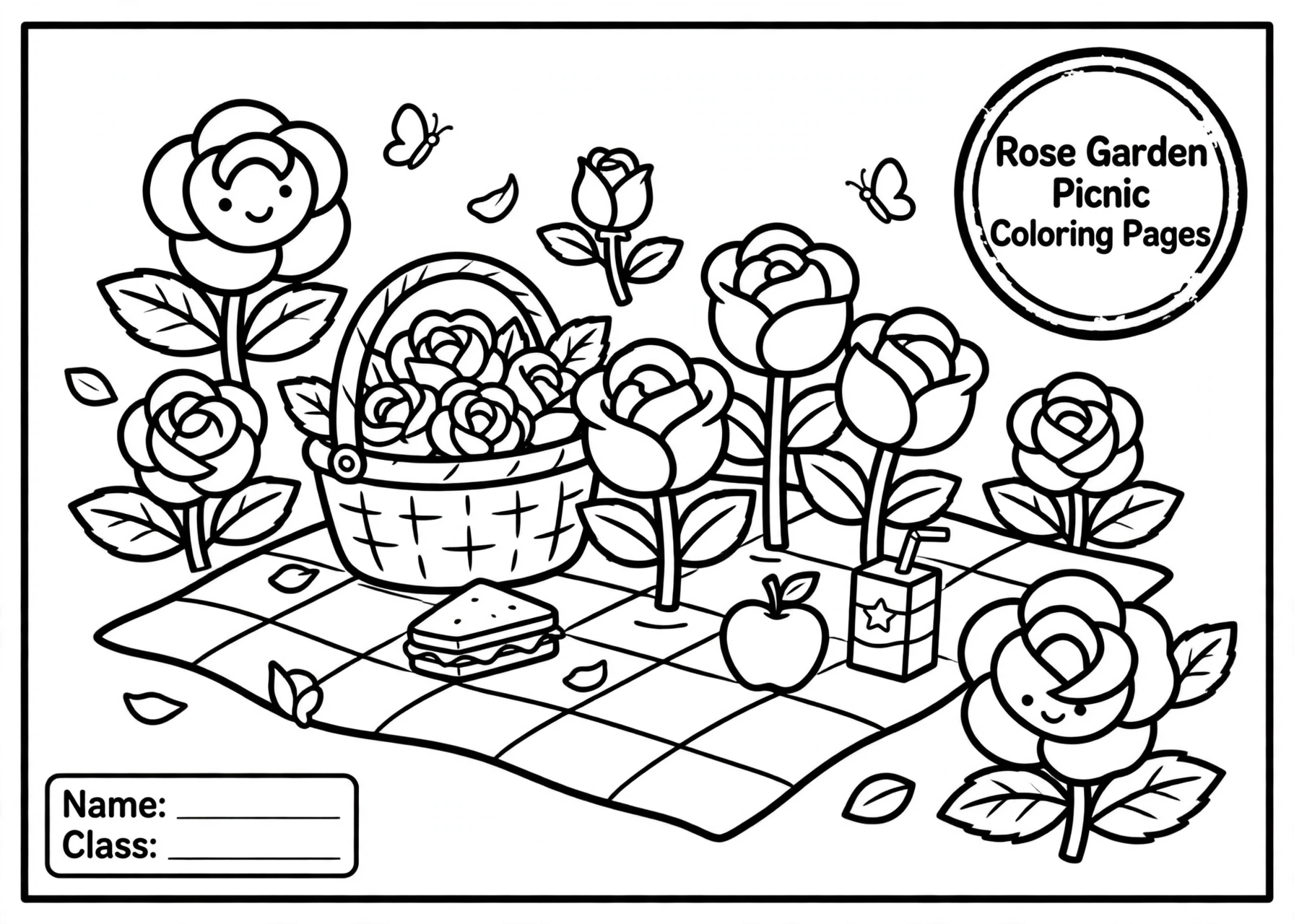
A Picnic Surrounded by Beautiful Roses
A picnic in a rose garden offers a lovely setting for a children’s coloring activity. Picture a peaceful outdoor space filled with blooming roses, green leaves, and a cozy picnic area where everything feels calm and inviting. The combination of flowers and picnic elements creates an interesting subject because children can experiment with different colors across natural and everyday objects. A rose can be bright red, soft pink, yellow, or white, while picnic accessories provide plenty of opportunities for additional color combinations.
Rose gardens are also visually interesting because their flowers come in different shapes and stages of bloom. Some roses have tightly folded petals, while others open into wide, layered blossoms. Their leaves and stems provide contrasting shapes that can make a garden illustration more engaging to color. Children can use these details to create their own interpretation of a cheerful outdoor setting.
The picnic theme adds a familiar human element to the scenery. A picnic basket, blanket, food, and outdoor accessories can help children imagine what they might bring for a relaxing afternoon in the garden. Rather than focusing only on individual flowers, they can think about how the different elements work together to create a complete outdoor experience.
Exploring Colors in a Rose Garden
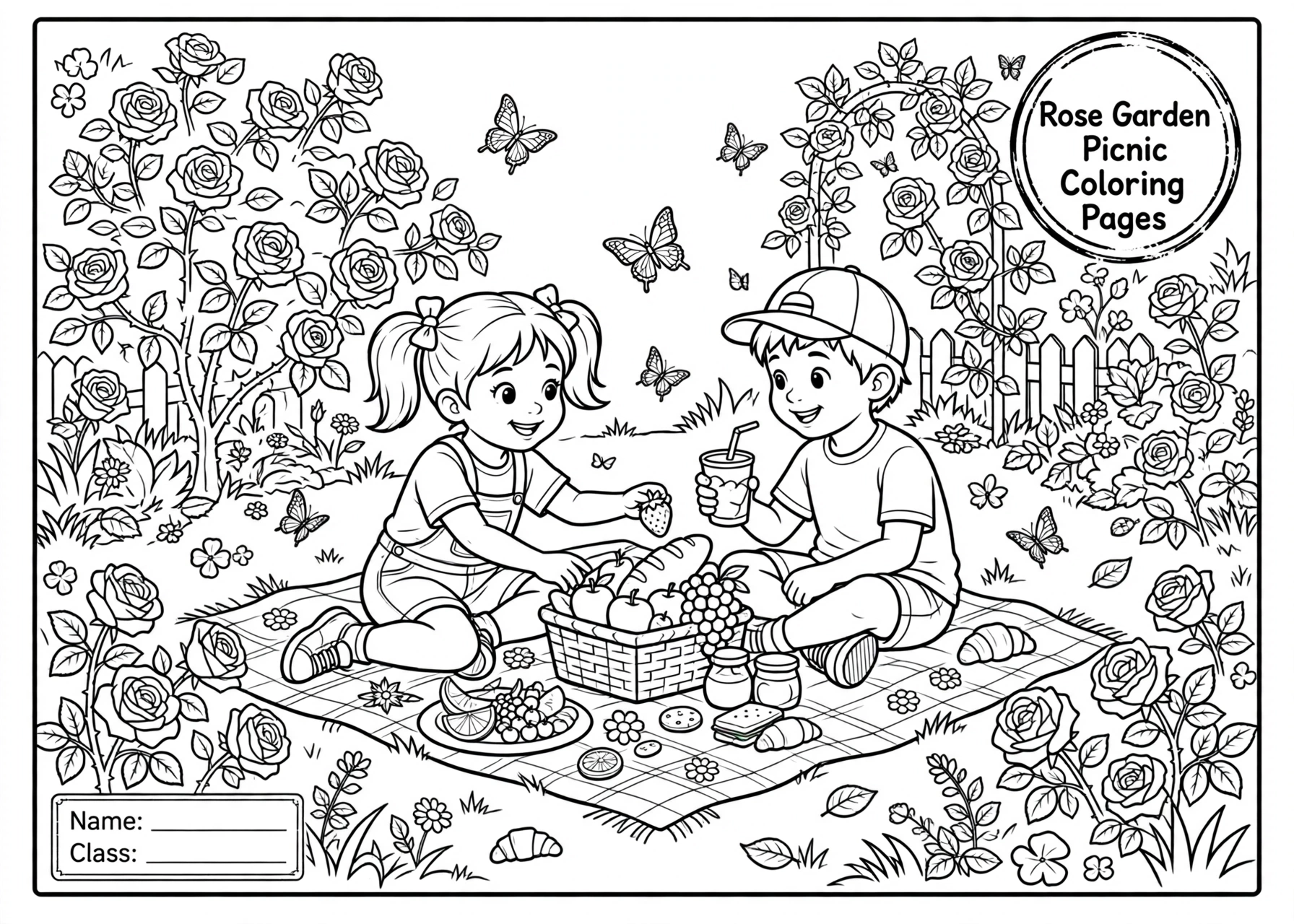
Roses offer more color possibilities than children might initially expect. Red roses are familiar, but pink, peach, orange, yellow, purple, and white varieties can also inspire interesting coloring choices. Children can choose one dominant flower color or create a garden where every rose looks different. This approach gives the picture a lively appearance without requiring complicated coloring techniques.
Greenery deserves attention too. Rose leaves can be colored in different shades of green, while stems may appear darker than the surrounding foliage. Children can use light green for younger leaves and deeper green for mature foliage. If the illustration includes grass, they might use several shades to distinguish the garden floor from the plants growing around the flowers.
A picnic blanket is another opportunity to experiment with patterns. Simple stripes, checks, or alternating color blocks can make the blanket stand out from the garden scenery. If a basket is included, shades of tan, brown, or beige can suggest a woven material. Children can also choose brighter colors for plates, cups, napkins, and other picnic accessories.
What Makes a Garden Picnic Scene Interesting to Color?
The appeal of a garden picnic illustration comes from the contrast between natural scenery and familiar picnic objects. Flowers have irregular organic shapes, while picnic accessories often contain simpler geometric forms. This combination gives children different areas to work on and prevents the entire picture from feeling visually repetitive.
The roses can become the main attraction through carefully chosen shades and contrasting centers. Leaves and flower stems help connect the blossoms, while the picnic setting creates a sense of place. If the design includes open space around the main subjects, children can imagine additional details such as butterflies, birds, clouds, or sunshine. These additions should remain optional so that each child can decide how much detail to include.
For children who enjoy outdoor scenery beyond flower gardens, exploring these landscape designs can provide another way to discover natural environments through coloring. Mountain views, open spaces, and other outdoor settings offer a different atmosphere from a picnic surrounded by roses.
Creative Ways to Personalize a Picnic Illustration
A coloring activity becomes more personal when children are encouraged to make small decisions about the scene. Instead of assigning a specific color to every object, parents and teachers can let children decide what kind of picnic they would like to imagine. One child might prefer a traditional red-and-white blanket, while another chooses a colorful pattern inspired by summer decorations.
Food is another enjoyable detail to discuss when it appears in the illustration or when children want to add their own ideas. They might imagine sandwiches, apples, strawberries, cookies, or a refreshing drink for the picnic. These familiar foods can introduce different colors and shapes into the picture. A basket could contain a variety of treats, while a small plate might hold fruit arranged in an attractive pattern.
Children can also invent a name for their imaginary garden picnic. Perhaps it is a quiet afternoon with family, a special celebration with friends, or a relaxing break after exploring the garden. Parents and caregivers can invite children to describe what they would bring along and which flowers they would like to see. This simple storytelling activity adds meaning to the artwork without making the coloring process feel like a lesson.
Choosing the Right Tools for Flowers and Picnic Details
Different coloring materials can create different effects in a rose garden illustration. Crayons work well for filling larger areas, such as flower petals, grass, and picnic blankets. Colored pencils are useful when children want to work on smaller details, including individual petals, leaf shapes, and patterns on picnic accessories. Washable markers can produce stronger colors, although children should use them carefully to avoid unwanted marks.
Layering two shades can make flowers more interesting. For example, children can begin with light pink petals and add a darker pink near the center. Yellow roses might combine pale yellow with a slightly deeper shade, while red flowers can have darker areas between their petals. These techniques do not need to be perfect; even simple variations can give each flower a distinctive appearance.
For children who prefer a simpler approach, coloring one section at a time is a practical option. They can finish the flowers first, move on to the leaves, and then work on the picnic objects. Taking short breaks between sections can also help keep the activity comfortable, particularly when the illustration contains many small details.
Bring Nature into Everyday Creative Activities
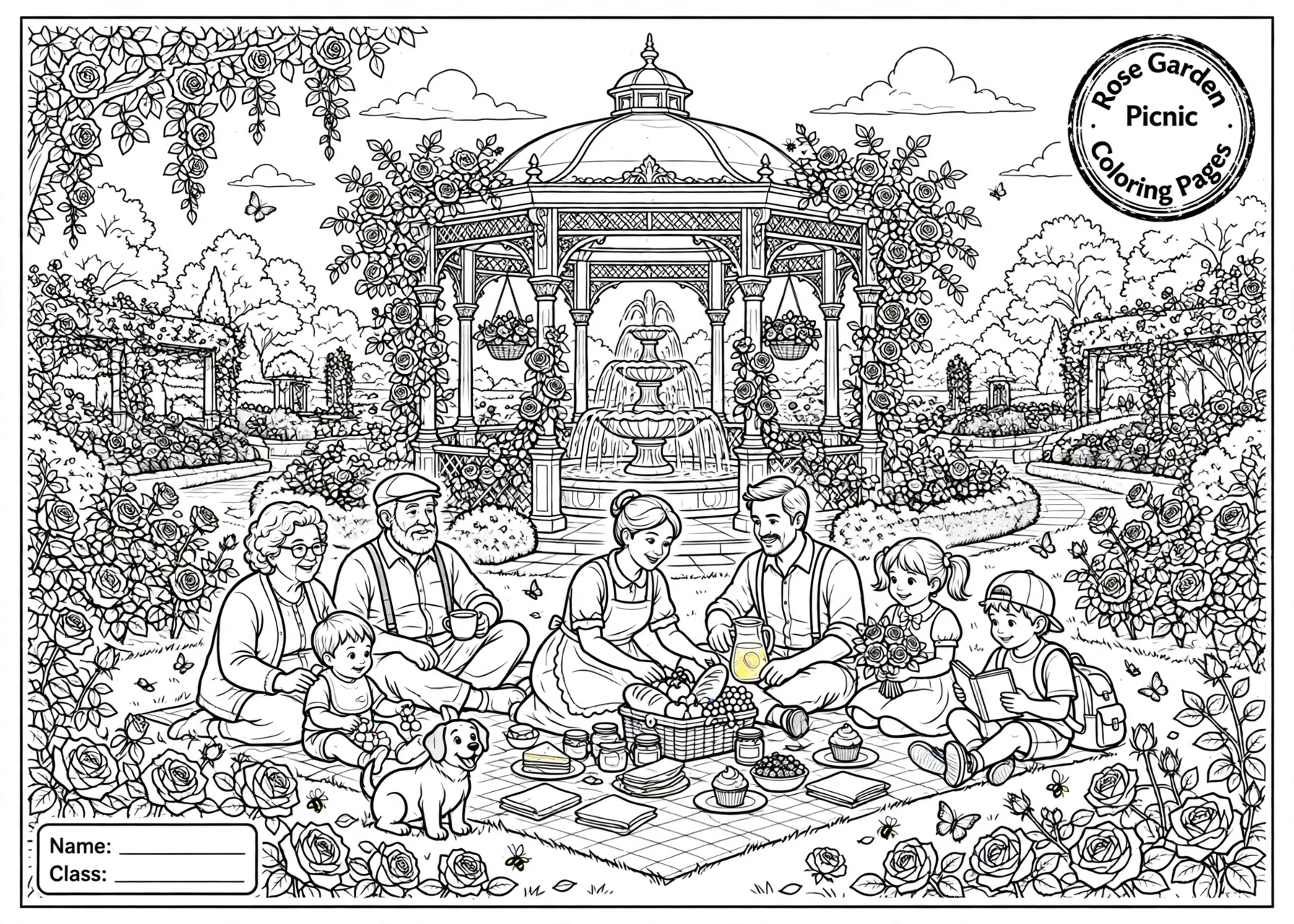
Rose Garden Picnic Coloring Pages can be used in different settings, from a quiet afternoon at home to a nature-themed classroom activity. Parents can offer the illustration as part of a weekend art session, while teachers may use it when introducing flowers, gardens, or outdoor recreation. Children can compare the colors they have chosen and explain why they prefer certain combinations.
A related activity is to explore how different natural environments influence the appearance of a landscape. For example, children can look at the scenery in these rice field illustrations and notice how open agricultural land differs from a garden filled with flowering plants. This comparison can encourage conversations about plants, outdoor spaces, and the many ways people enjoy nature.
Before printing a selected design, check the print preview to ensure the illustration fits properly on the page. Prepare the coloring materials beforehand and provide a comfortable surface where children can spread out their crayons or pencils. If markers are being used, placing a spare sheet underneath the printable can help protect the table from ink marks.
A rose garden picnic offers more than a collection of flowers and outdoor objects. It creates a setting where children can combine natural colors, familiar picnic details, and their own imaginative ideas. Whether they choose realistic rose shades or invent an entirely different garden palette, each finished illustration can become a personal interpretation of a peaceful afternoon outdoors.
