Police Motorcycle Coloring Pages bring the excitement of road patrols into a child’s art time. Discover creative coloring ideas, printable activities, and ways to explore traffic safety through imaginative play.
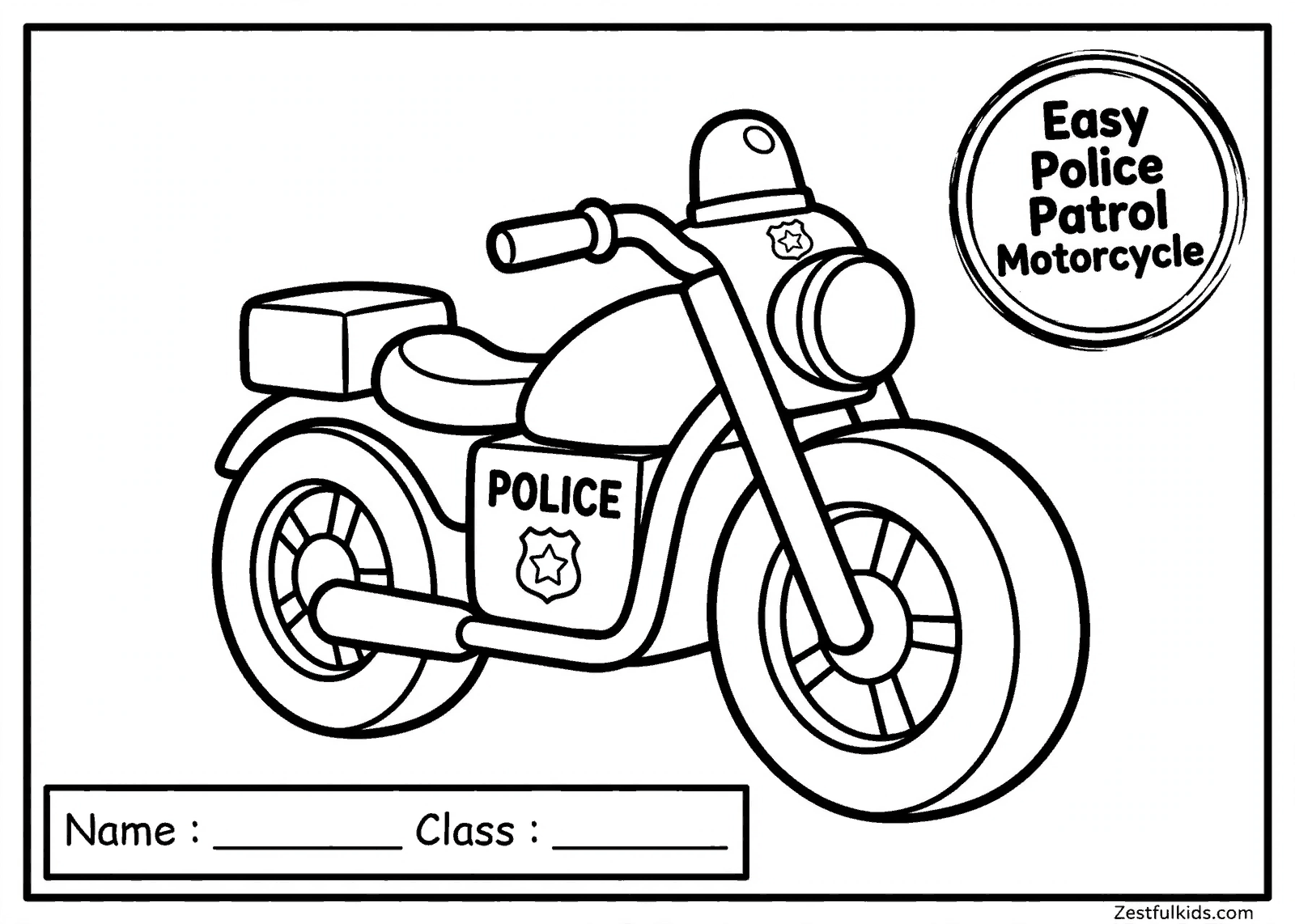
Discover the Appeal of Police Motorcycle Coloring Pages
A police motorcycle is more than an ordinary vehicle. It is designed for quick movement through busy streets, and its distinctive appearance makes it an interesting subject for children who enjoy drawing, vehicles, and stories about public safety. With Police Motorcycle Coloring Pages, children can explore the shapes and details of a motorcycle while deciding how to bring each illustration to life with their favorite colors.
Police motorcycles are often associated with traffic patrols, community events, and emergency responses. Their compact frames, two wheels, handlebars, mirrors, and protective equipment offer plenty of details for young artists to notice. Depending on the illustration, children may also encounter a windshield, storage boxes, lights, or a uniformed officer. These features create opportunities to discuss what makes a police motorcycle different from a regular motorcycle.
For parents and teachers, this theme can be a practical addition to a collection of printable vehicle activities. It works naturally alongside lessons about transportation, road signs, and the people who help keep public roads organized. Rather than treating coloring as a task with one correct result, adults can encourage children to observe the picture and make their own artistic decisions.
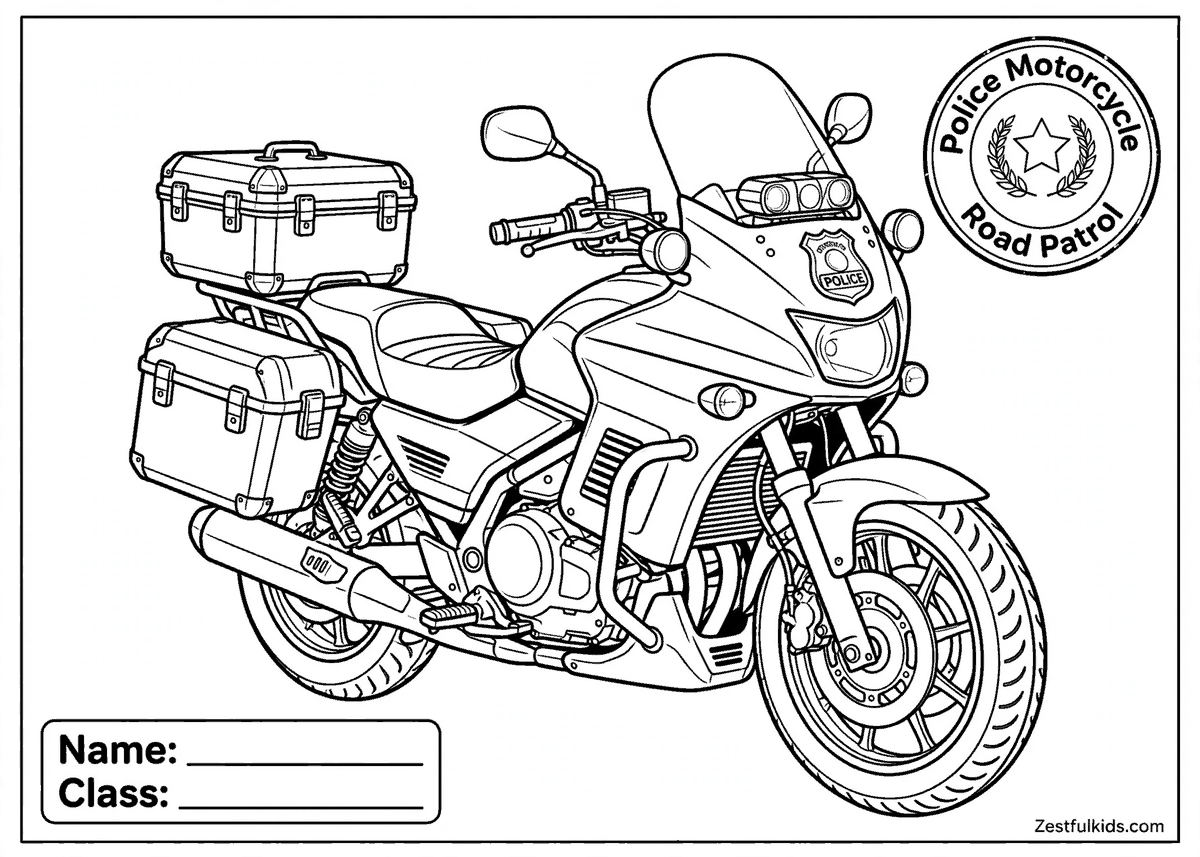
What to Look for in a Police Motorcycle Illustration
Not every police motorcycle design offers the same coloring experience. Some illustrations emphasize the overall vehicle shape, while others include smaller details that invite more careful coloring. Choosing a suitable design depends on the child’s interests, confidence, and willingness to work with different shapes.
Simple Motorcycle Shapes for Younger Artists
Illustrations with broad outlines and fewer small details can be a comfortable starting point for children who prefer straightforward coloring activities. A large motorcycle body, clearly defined wheels, and simple handlebars provide recognizable areas to fill in. Children can begin with two or three colors instead of worrying about every small component.
Adults can introduce the basic parts of the vehicle before coloring begins. Ask the child to point out the front and rear wheels, identify the seat, or find the mirrors. These small observations make the activity more interactive without turning it into a formal lesson.
Detailed Designs for Vehicle Enthusiasts
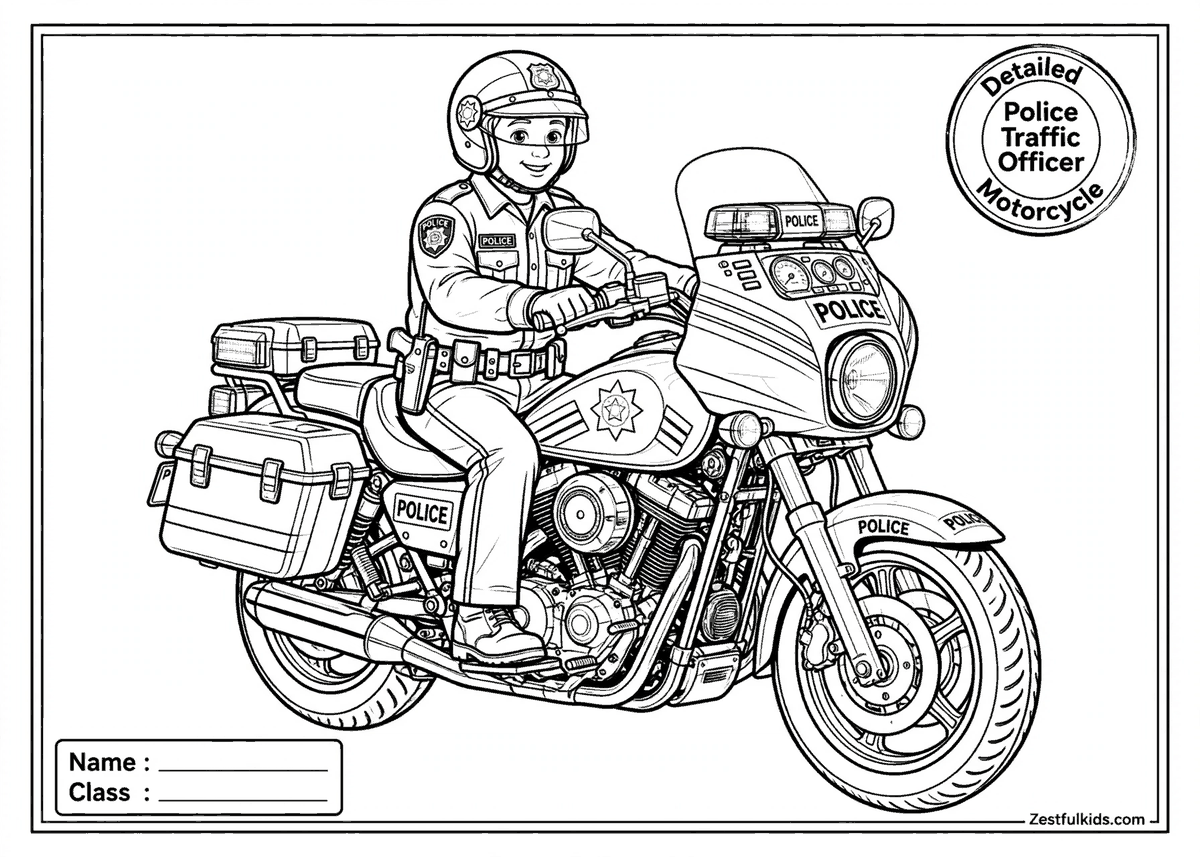
Older children or those who enjoy intricate pictures may prefer illustrations with additional motorcycle equipment. Depending on the actual design, this might include a windshield, headlight, side cases, instrument panel, or a police officer wearing protective gear. Such details provide more opportunities to experiment with contrasting colors and careful pencil strokes.
Encourage children to work from larger shapes toward smaller ones. Coloring the main body first and returning to the mirrors, lights, and other components afterward can make a detailed picture easier to manage. There is no need to rush; the aim is to enjoy the process and create an image that reflects the child’s ideas.
Choosing Colors for a Realistic or Imaginative Police Motorcycle
Many people associate police motorcycles with white, black, blue, or other official-looking colors, but their appearance varies by country and police department. Children can use these familiar colors when they want a realistic result, or they can create a fictional patrol motorcycle with a completely different color scheme.
For a realistic approach, try a dark motorcycle body with white panels, silver-gray mechanical details, and a bright red or blue accent where the illustration includes emergency lights. Black or dark gray can work well for tires, while lighter gray helps distinguish metal components from rubber surfaces. If a police officer is included, children can choose uniform colors inspired by local traffic officers without needing to reproduce an exact uniform.
A more imaginative approach can be just as enjoyable. A child might create a green motorcycle for a forest patrol, a yellow-and-black design for a fictional city, or a colorful motorcycle belonging to an imaginary superhero police officer. These choices are creative interpretations rather than statements about actual police equipment.
Before beginning, place a few crayons, colored pencils, or washable markers on the table. Colored pencils offer more control around small motorcycle parts, while crayons are convenient for larger spaces. Markers can produce bold colors, although adults should check that the paper can handle them without excessive bleeding.
Turn Coloring Time Into a Road Safety Activity
Police Motorcycle Coloring Pages can also provide a natural starting point for simple conversations about safe behavior on the road. While coloring, parents or teachers can explain that traffic officers help manage traffic, support road safety, and respond to certain incidents. The conversation can remain brief and appropriate to the child’s age.
One activity is to invite children to imagine where the motorcycle might be working. Perhaps it is helping direct traffic near a school, monitoring a busy intersection, or participating in a community parade. Ask the child to describe the scene and identify any road users who might appear in the story.
If the illustration does not include a background, children can draw one on a separate sheet or add simple scenery around the motorcycle if space allows. Possible additions include a road, traffic lights, a pedestrian crossing, buildings, or a few trees. Encourage them to think about where vehicles and pedestrians should be positioned, while explaining that real road rules depend on local traffic laws.
For a broader art activity, pair the motorcycle with a conversation about how colors communicate information. A traffic light, for example, uses different colors to convey different instructions. Children can draw their own traffic signal next to the motorcycle and discuss what each light means. This gives the coloring session a clear connection to everyday experiences without requiring a complicated worksheet.
Printing and Organizing the Activity
Before printing a chosen illustration, check the available preview and make sure the main motorcycle details are visible. If the image contains fine lines, selecting a print quality that preserves those details can help produce a clearer result. The appropriate paper size and orientation will depend on the file provided, so review the layout before sending it to the printer.
For children using crayons or colored pencils, ordinary printer paper may be sufficient. If markers are preferred, thicker paper can help reduce ink transfer, although the best choice depends on the marker type. Placing scrap paper underneath the illustration provides an additional layer of protection for the table.
Teachers can organize the activity around a transportation theme by preparing crayons, pencils, and optional sheets for drawing road signs. Parents might use it during a quiet afternoon, a vehicle-themed birthday activity, or a family art session. If several children participate, allow each child to choose a different color scheme rather than asking everyone to copy the same example.
Once the coloring is finished, invite children to give their motorcycle a name and describe its imagined patrol route. They could draw a small map showing the places it visits or tell a short story about helping people cross a busy street safely. The finished picture then becomes part of a larger creative activity instead of an isolated coloring task.
Explore More Creative Coloring Ideas
Children who enjoy experimenting with colors may also appreciate activities that encourage personal choices and imaginative interpretation. The article Your Child Colored the Ocean Red? That’s Not a Mistake offers a useful perspective on accepting unusual color choices in children’s artwork. This idea fits naturally with police motorcycle coloring, where a child might prefer a purple patrol vehicle or a rainbow-colored helmet instead of traditional shades.
For children who want to move from vehicles to nature-inspired designs, Tropical Flower Paradise provides another creative direction to explore. Flowers introduce different shapes, patterns, and color combinations, giving young artists a change of subject while keeping the emphasis on personal expression.
Police Motorcycle Coloring Pages can be a simple yet engaging way to combine vehicles, art, and everyday observations. Whether a child prefers a straightforward motorcycle outline or a detailed patrol scene, the activity offers room to explore colors, notice familiar objects, and invent stories. With a few coloring tools and encouragement from an adult, an ordinary printable can become a personalized picture inspired by the world of traffic and public service.
